Why Are Jeans So Uncomfortable?
It is not just you
Plenty of people love how jeans look and quietly dread wearing them. The fabric is stiff. The waistband digs. The thighs feel tight when you sit. There are real reasons for all of that, and most of them can be solved.
The fabric is tough by design
Denim is a cotton twill, a woven fabric with a diagonal rib, and it was built for hard-wearing work clothes. It is dense and has no natural stretch. A new pair of rigid jeans needs time to soften and mould to your body.
That durability is also its drawback. A heavy fabric does not move with you, so bending, squatting or sitting for hours pulls against the weave.
Common causes of discomfort
Wrong size or cut
Sizing differs between brands. A 32 in one label may fit like a 30 or 34 in another. If a pair pinches at the hip or cuts at the waist, the cut may not suit your body, even if the number is right.
The waistband and rise
A rigid waistband sits against the stomach all day. A low rise can dig when you sit, and a very high rise can press on the ribs. Try different rises. A mid rise is usually the easiest to live with.
Seams, rivets and buttons
Thick inseams, a metal button and rivets can rub, especially when you sit or walk long distances. Flat-felled seams are strong but can be bulky at the crotch.
Lack of stretch
Denim with 1 to 2 percent elastane is common and much more forgiving. Pure cotton jeans look classic but feel stiffer. Which is better depends on what you want. Rigid jeans age beautifully. Stretch jeans move better.
Skinny cuts
Narrow legs trap heat and limit movement. If your thighs feel squeezed, try a straighter shape. Stovepipe jeans or a regular straight leg give more room.
Comparison of fabric types
| Fabric | Feel | Best for |
|---|---|---|
| Rigid 100% cotton | Stiff at first, softens with wear | Durability, a classic look |
| Cotton with elastane | Flexible, comfortable from day one | Everyday wear, travel |
| Lightweight denim | Soft and breathable | Warm weather |
How to make jeans more comfortable
- Wash them before wearing, following the care label, to remove some stiffness
- Wear them often so the fabric breaks in
- Check the fit sitting down in the shop or at home
- Try a different rise or leg shape
- Choose a lighter weight or a stretch blend
- Use a soft belt, or no belt, if the waist digs
Light stretching also helps. Wearing a slightly tight pair around the house loosens the fibres. Warm, damp denim stretches a little as you move, then holds the new shape as it dries. Do it carefully, though, to avoid damage.
Think about what you wear them with
A bulky outfit on top can make jeans feel tighter. A soft top and a roomy tee help. Comfortable shoes matter too, because long days in stiff denim and stiff shoes add up. For footwear ideas see are skate shoes good for walking.
When to give up on a pair
If a pair is painful after a proper break-in, it is simply not your fit. Donate or resell it. Life is too short to suffer for a pair of trousers.
Remember that jeans do not have to be rigid or skin tight. There are plenty of cuts, from relaxed to flared, as in flared versus bootcut, that give your legs space.
Buying checklist
- Try several sizes and cuts
- Sit, squat and walk in them
- Check the fabric content label
- Pay attention to the rise
- Buy the pair that feels good in the fitting room, not the one you hope will stretch
The role of washing and finishing
Jeans are often treated after weaving. Some are sanded, stone washed or sprayed to look worn in, and others come raw with a stiff starch finish. Raw denim feels very stiff at first, since the fabric has not been softened. Pre-washed jeans are more comfortable from the start, although they lose a little of that crisp look.
Washing gradually relaxes the fibres. That said, repeated hot washes and tumble drying shrink the fabric and can make a pair tighter than before. Cool water and air drying keep sizes stable.
Body changes through the day
Bodies are not the same size at every hour. After a meal, or at the end of a long day, a waist that fit in the morning can feel tight. Comfort-minded people often size up slightly in a waist or choose a stretch fabric for this reason.
Women’s and men’s cuts
Cuts are designed around different average proportions, so a pair labelled for another gender may fit better on you. Do not be put off by labels. Try whichever cut gives you room where you need it.
Small tweaks that help
Soft cotton underwear without thick seams reduces rubbing. Choosing a pocket-lining fabric that is light also keeps the hip area flatter. If a button digs in, a tailor can sometimes move it a few millimetres, which is a cheap fix. Do not forget the simple things, such as unbuttoning when you sit for a long meal. A pair of jeans that is nearly right can often be made right with an alteration.
FAQ
Do jeans get more comfortable over time?
Rigid denim usually softens and shapes itself to you with wear and washing. Stretch denim is comfortable sooner.
Is stretch denim worse quality?
Not necessarily. It is a different trade-off. It is more flexible but may lose shape faster than rigid cotton.
Why do my jeans hurt when I sit?
Often the rise is too low or too high, or the waist is too tight. Try another cut or size.
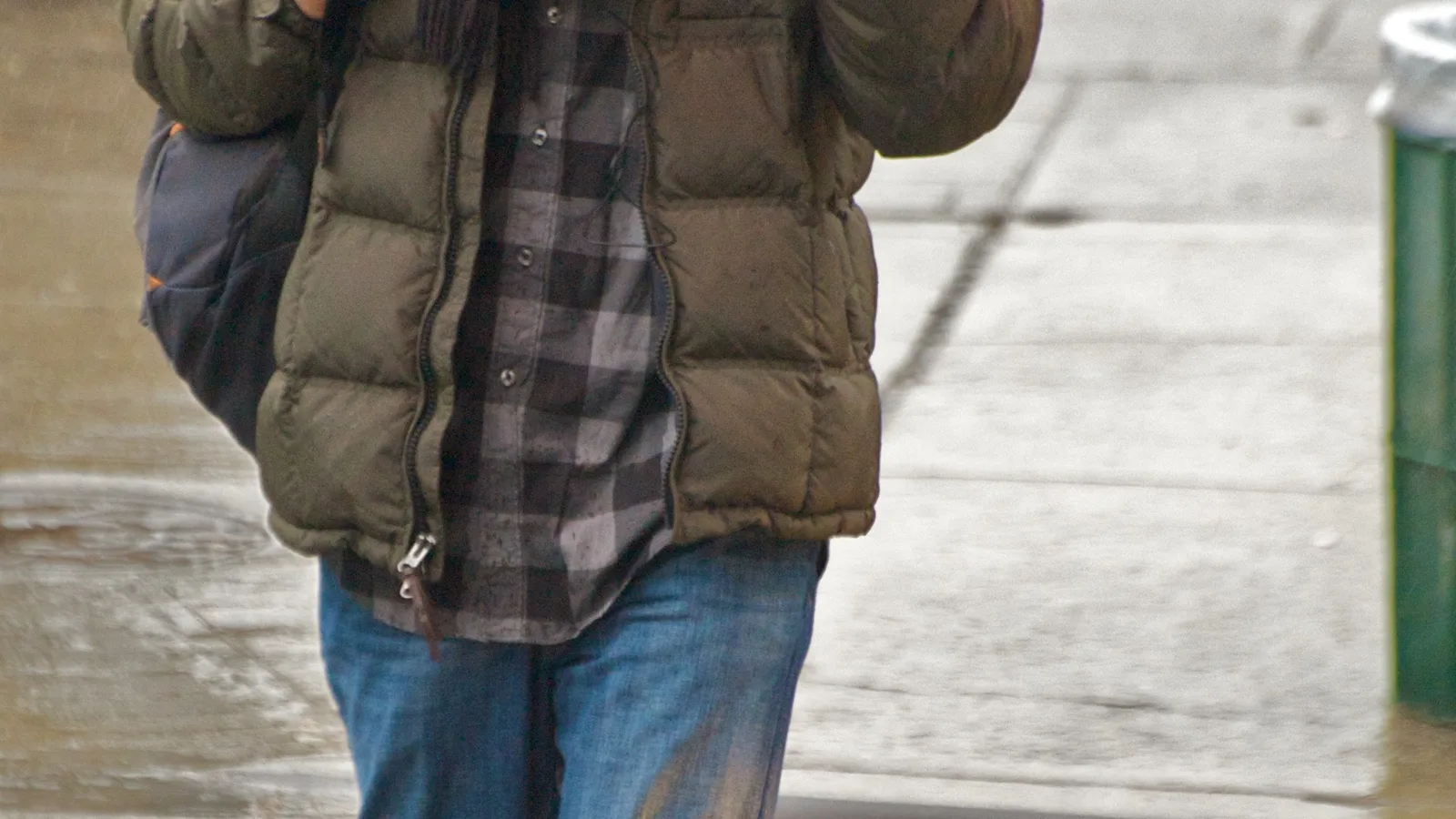
Photo: Ed Yourdon from New York City, USA / Wikimedia Commons (CC BY-SA 2.0)